PROTOTYPE VALIDATION IMAGERY — CLICK TO EXPAND
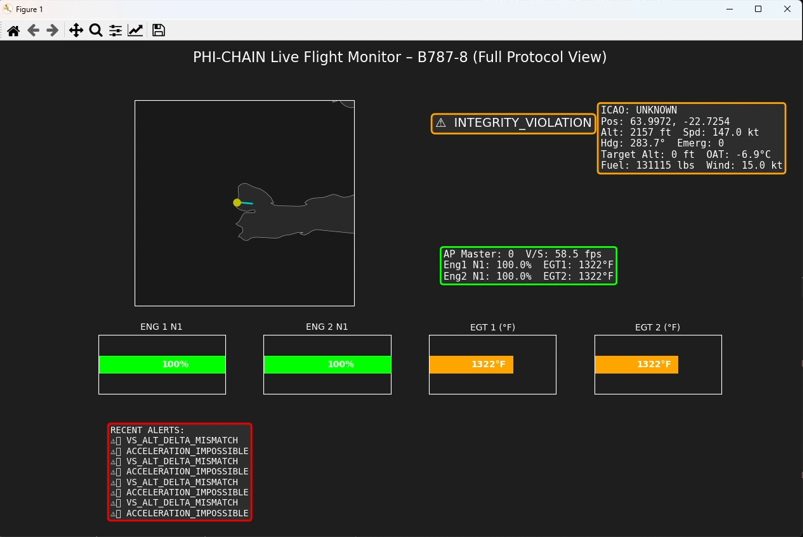
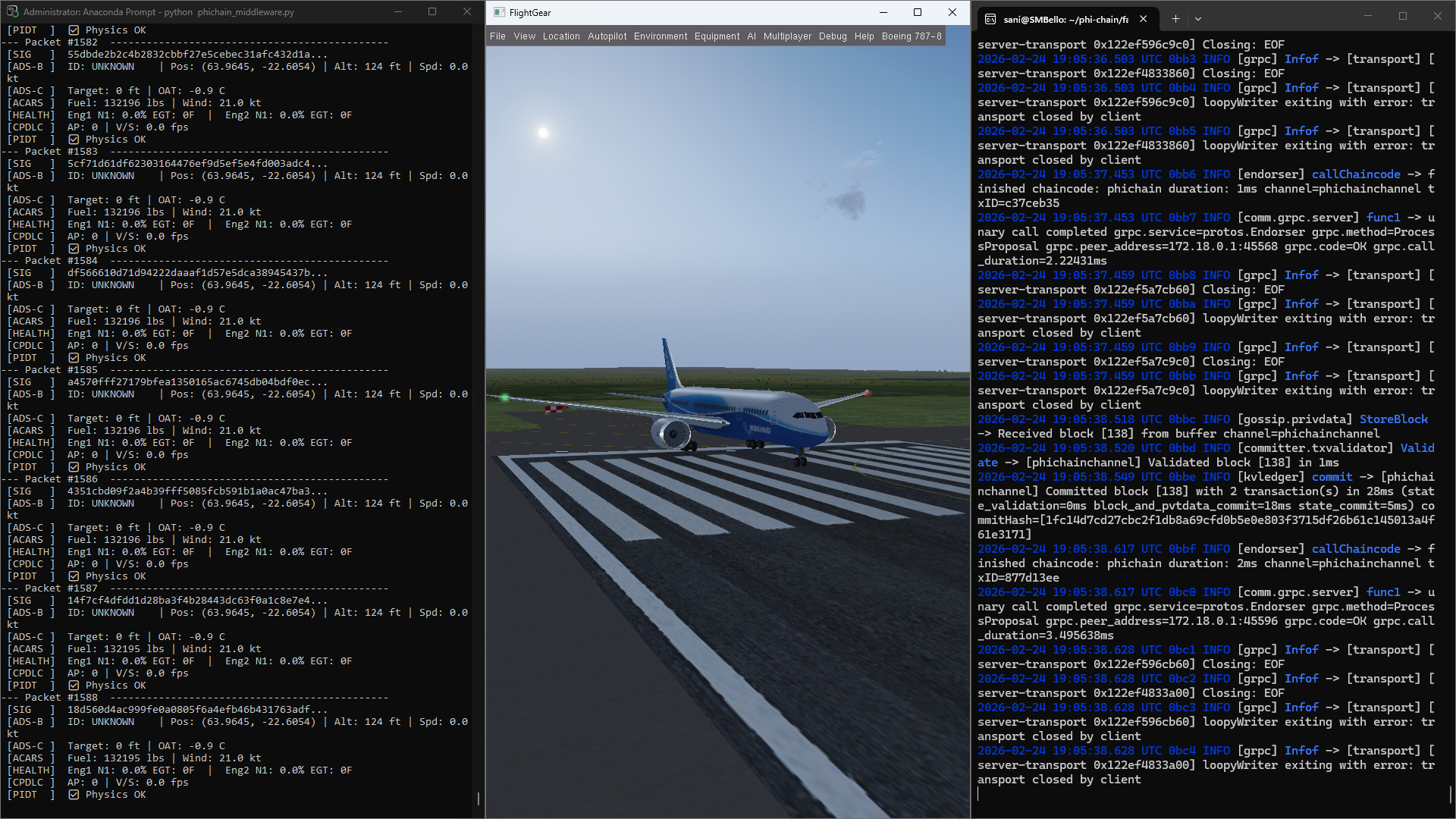
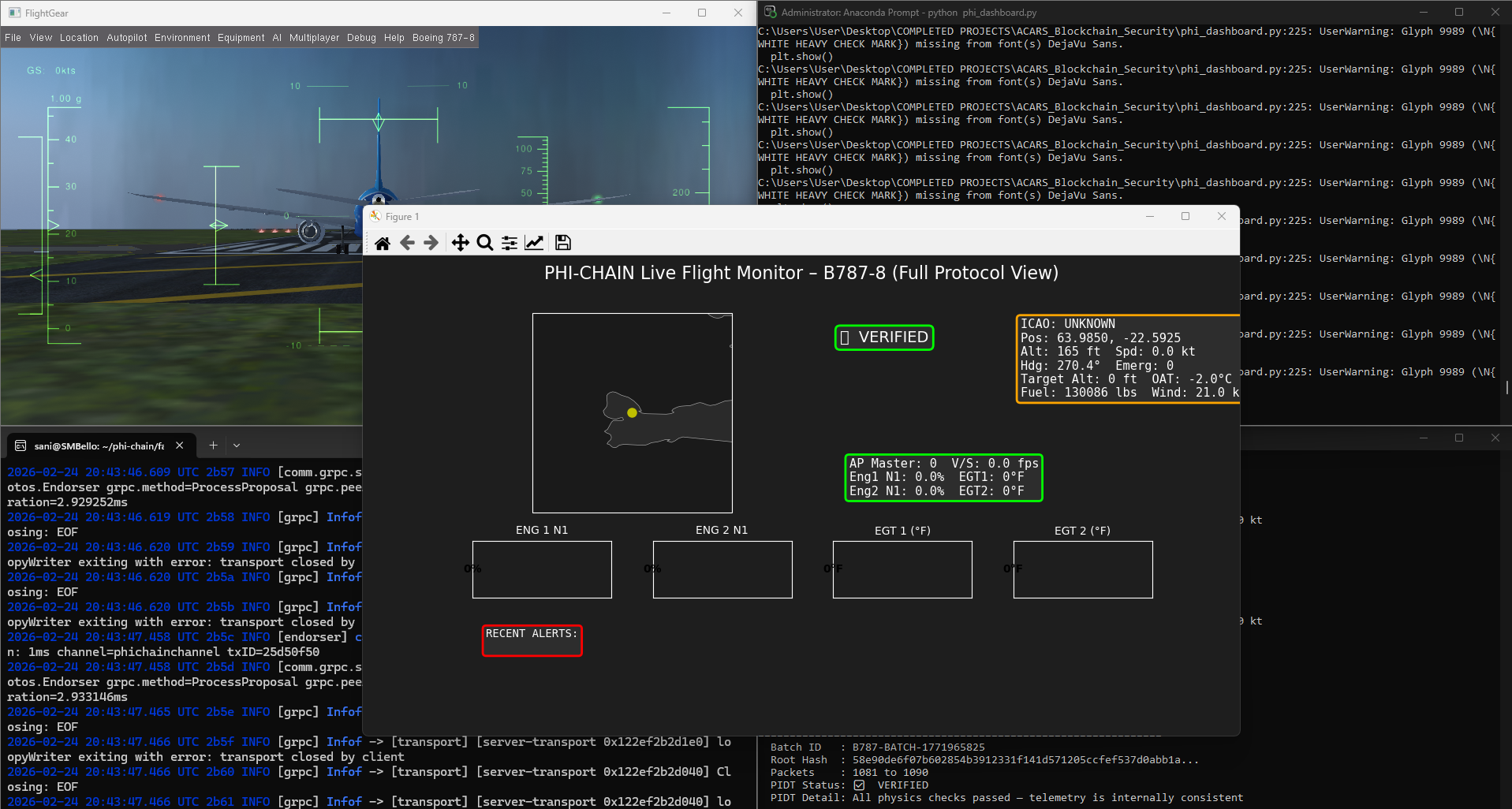
Permissioned distributed ledger security for ADS-B and ACARS telemetry — designed to close the gap where legacy avionics protocols trust a signal just because it arrived in the right format.
Modern aircraft communications protocols — ADS-B, ACARS, TCAS — were designed decades before anyone worried about a bad actor spoofing them. They authenticate format, not origin. A convincing fake signal can look identical to a real one to the receiving system.
PHI-Chain runs a permissioned Hyperledger Fabric network alongside existing avionics comms, cross-referencing incoming telemetry against a tamper-evident distributed ledger before it's trusted. The hard problem we solved is what we call the TCAS Paradox: TCAS needs sub-second response times that a full blockchain consensus round can't naturally deliver without risking the very collision-avoidance function it's meant to protect. Our Split-Payload Architecture separates the time-critical collision data from the slower-consensus integrity verification, so safety-of-flight timing is never compromised waiting on ledger confirmation.
We benchmarked latency across 2,300+ transaction batches to validate this holds under realistic load, not just in a clean lab run.
Full protocol architecture, threshold-cryptography scheme, and consensus configuration are reserved for OEM and institutional partners under NDA — this page covers what the system does, not how it's built.
Independent validation, flight test data, or certification pathway guidance would move PHI-Chain from lab-proven to field-proven faster than we can do it solo.
Talk to us about validationThe real-time patent and research landscape underneath this suite, updated continuously via Lens.org.
Aviation communications security & blockchain — patents, trends & white space
Powered by Lens.org
This is being built in the open. The strip below reflects real progress, pulled live.
Want to help build this? Join the project →